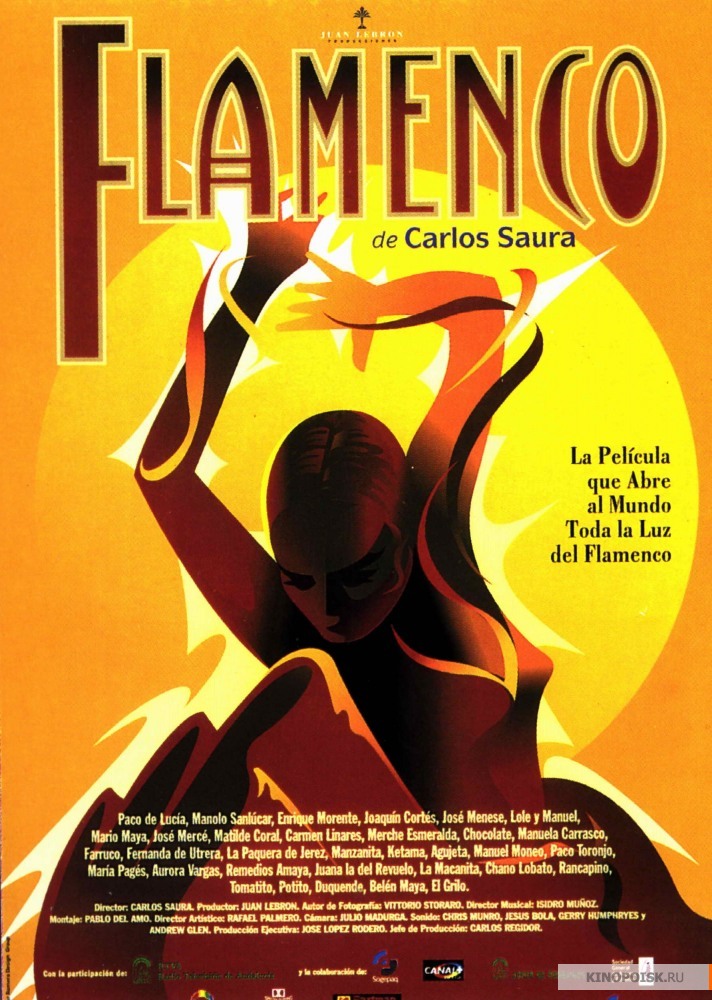
Flamenco
As a hall fills with performers, a narrator says that flamenco came from Andalucia, a mix of Greek psalms, Mozarabic dirges, Castillian ballads, Jewish laments, Gregorian chants, African rhythms, and Iranian and Romany melodies. The film presents thirteen rhythms of flamenco, each with song, guitar, and dance: the up-tempo bularías, a brooding farruca, an anguished martinete, and a satiric fandango de huelva. There are tangos, a taranta, alegrías, siguiriyas, soleás, a guajira of patrician women, a petenera about a sentence to death, villancicos, and a final rumba. Families present numbers, both festive and fierce. The camera and the other performers are the only audience.
- Runtime
- 1h 40m
- Released
- 1995
Details
Release year: 1995
Storyline
As a hall fills with performers, a narrator says that flamenco came from Andalucia, a mix of Greek psalms, Mozarabic dirges, Castillian ballads, Jewish laments, Gregorian chants, African rhythms, and Iranian and Romany melodies. The film presents thirteen rhythms of flamenco, each with song, guitar, and dance: the up-tempo bularías, a brooding farruca, an anguished martinete, and a satiric fandango de huelva. There are tangos, a taranta, alegrías, siguiriyas, soleás, a guajira of patrician women, a petenera about a sentence to death, villancicos, and a final rumba. Families present numbers, both festive and fierce. The camera and the other performers are the only audience.
Top credits
- La Paquera de Jerez — Self (segment: Bulerías)
- Merche Esmeralda — Self (segment: Guajira)
- Manolo Sanlúcar — Self (segment: Alegrías)
- Joaquín Cortés — Self (segment: Farruca)